


Generative AI and Traditional Filmmaking: Friend or Foe?
Few conversations are dominating the creative industries right now quite like the rise of generative AI. From Sora to Runway, Midjourney to Kling, the tools arriving in rapid succession promise to generate video content, visual effects, and entire scenes from a text prompt. For an industry built on craft, collaboration, and human vision, it raises an uncomfortable but necessary question: what does generative AI actually mean for traditional filmmaking?
At Horizon Collective, we think about this constantly, not with anxiety, but with genuine curiosity. Because the honest answer is more nuanced than either the hype or the fear would suggest. AI is neither the death of filmmaking nor a magic solution. It is, however, a genuine shift, and understanding it is now essential for anyone commissioning or producing film and video content.
What Generative AI Can Actually Do in Film and Video Production
To have a clear-eyed conversation about AI and filmmaking, it helps to be specific about what these tools currently do well, and what they don't.
Where AI is genuinely capable today:
Visual effects and compositing - AI-driven tools are dramatically reducing the time and cost of removing objects, extending backgrounds, and cleaning up footage in post-production
Colour grading assistance - machine learning models can now suggest and apply colour grades with a speed that would have been unthinkable five years ago
Script and ideation support - generative AI can rapidly produce script drafts, treatments, and creative variants for human creatives to refine and redirect
Voiceover and audio - synthetic voices have reached a quality that makes them genuinely useful for certain briefs, particularly in corporate content and e-learning
Short-form social content - for high-volume, low-complexity social media content, AI tools can accelerate production significantly
Where AI still falls meaningfully short:
Emotional authenticity - AI-generated video still struggles to capture the micro-expressions, physical presence, and genuine human connection that makes great film resonate
Narrative coherence over length - generative video tools produce compelling moments but consistently struggle with sustained storytelling across two, five, or ten minutes
Brand specificity - a text prompt cannot understand your brand's personality, values, and relationship with its audience the way a creative team that has invested time in your business can
On-location reality - the texture of a real place, a real person, a real moment, these remain stubbornly beyond what AI can replicate with any reliability
There is a version of the AI conversation that goes like this: AI will replace filmmakers, production crews, and creative agencies within a decade. We don't believe that framing is useful or accurate, but we do think it's important to be honest about where the real disruption is happening.
The threat to traditional filmmaking is not AI replacing human creativity. It's AI lowering the floor of acceptable quality, making it possible for brands to produce a certain volume of content at very low cost and effort. This means the value of genuinely distinctive, high-craft video content goes up, not down. What changes is the middle ground: generic, formulaic video production that offers little creative differentiation becomes much harder to justify on cost grounds when AI can produce something similar for a fraction of the price. The agencies and filmmakers who will thrive are those who double down on what AI cannot replicate, human insight, emotional intelligence, creative risk, and the irreplaceable quality of a real story told well.
How Generative AI Is Already Changing Production Workflows
Beyond the philosophical debate, the practical reality is that AI tools are already embedded in production workflows at every level of the industry, and ignoring them is no longer a credible position for any serious creative agency.
Pre-production
AI is having its most unambiguous positive impact in pre-production. Storyboard generation, mood board creation, location visualisation, script drafting, and even preliminary casting research are all areas where AI tools are saving meaningful time without compromising creative quality. The human creative still makes every significant decision - but they arrive at those decisions faster and with more options to consider.
Production
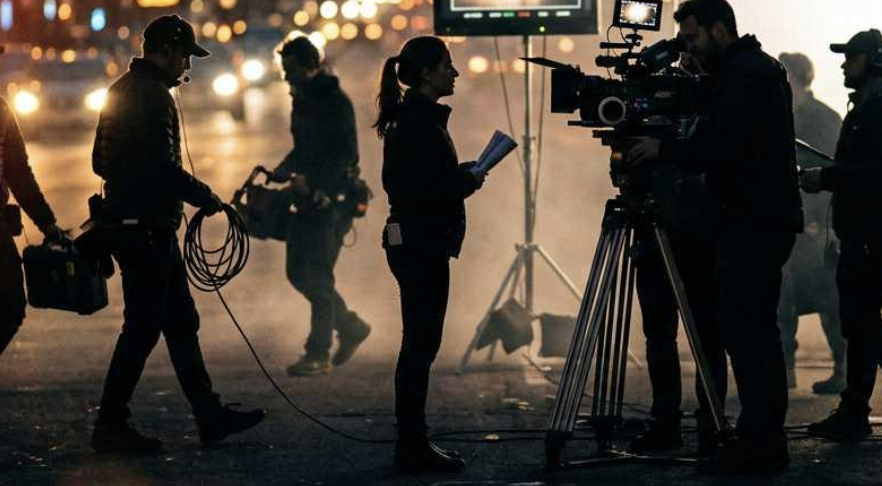
On set, AI's influence is currently more limited. Some productions are using AI-assisted camera systems for tracking and framing, and real-time colour monitoring tools have improved significantly. But the core of production - direction, performance, lighting, human collaboration - remains fundamentally human-led, and we expect it to stay that way for the foreseeable future.
Post-production
This is where AI's impact on traditional workflows is most significant right now. Automated editing assistants, AI-powered noise reduction and audio clean-up, intelligent subtitle generation, and background replacement tools are all reducing post-production timelines. Used well, these tools free up editors and colourists to focus their expertise where it matters most.
What This Means for UK Brands Commissioning Video
If you're a UK business that commissions video content, the AI conversation has direct practical implications for how you think about budget, quality, and what you're really paying for.
The key question to ask yourself - and your agency - is: what is this video actually trying to achieve?
If the goal is volume, high-frequency social content, product image variations, rapid-turnaround corporate updates - then AI-assisted production is likely to become a legitimate part of the answer, and a good creative agency should be honest with you about where it can reduce cost without reducing impact.
If the goal is differentiation - a brand film that communicates your values, a campaign that creates genuine emotional connection, content that positions you as a leader in your market, then the craft, experience, and creative intelligence of a human-led team remains not just relevant but essential. No prompt can tell your story the way a creative team that understands your business can.
Our Position at Horizon Collective
We are not anti-AI. We are pro-quality, pro-craft, and pro-honest conversation about what different tools are actually good for.
What we believe, after years of producing film and video content across the UK and internationally, is this: the brands that will look back on this period most favourably are those that resisted the temptation to chase cheap volume and instead invested in content with real creative ambition. AI makes bad content cheaper to produce. It also makes the gap between that and genuinely great content more visible than ever.
Frequently Asked Questions:
Will AI replace video production agencies?
Not in any meaningful timeframe, and probably not at all for high-quality creative work. AI tools are becoming part of production workflows, but the strategic thinking, creative direction, storytelling craft, and client collaboration that define a great agency are fundamentally human qualities. What AI is likely to replace is generic, low-ambition video content, which is arguably a good thing for the industry overall.
Can brands use AI to produce their own video content without an agency?
For certain types of content, social media posts, simple product demos, internal communications - AI tools are becoming increasingly capable of producing acceptable results without professional production support. For brand-building content, campaign films, and anything where creative differentiation matters, the gap between AI-generated and professionally produced content remains very significant.
How are UK film and video production companies adapting to generative AI?
The most forward-thinking agencies are integrating AI tools into pre-production and post-production workflows to improve efficiency, while doubling down on the human creative skills that AI cannot replicate. The agencies struggling most are those in the middle - producing competent but undifferentiated content that AI can now approximate at a fraction of the cost.
What should I ask a video production agency about their use of AI?
Ask whether they use AI tools in their workflow and, if so, at which stages. Ask how they ensure AI-assisted elements are transparently handled and how they balance efficiency with creative quality. A confident, honest answer to these questions is a good sign. Evasiveness or overclaiming in either direction - either pretending AI doesn't exist or suggesting it does everything should give you pause.
It's always good to have a human handle on any technology and use it to assist in reaching the purpose and destination you want to arrive at.


